Thursday, March 13, 2014

Quality of Condo vs House Lifestyles: You Get What You (Must) Pay For


This is a brief analysis of why tenants who demand repairs on their condo while withholding payments is a terrible idea not only for the maintenance of their condo unit, but also their relationship with their condo association. Surely, it is a pain to have to wait on someone else to do the work for you in your condo as opposed to a house, where the punctuality of the repairs is determined solely by the homeowner.

Withholding payments from condo fees from your HOA charged while waiting and complaining is just as ineffective to withholding payments for state taxes that fix potholes in the roads that you commute on daily.

The repercussions of payment refusal can land you with hefty fines for delinquent dues. In casino gaming terms, if tenants of the condo association are going to gamble in this way, just remember that the house, or HOA, always wins.
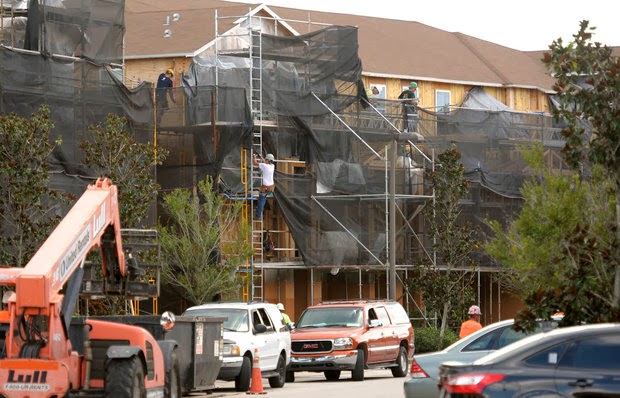

A Condo Tenant's Main Problem: Maintenance


For many homebuyers, the determining factor for their investment is the lifestyle choice. In the process of deciding your permanent residence to build home equity and a revocable trust, people may want to have a concierge and parking lot with security with a revocable trust that protects them in their investment. But as you know from our previous blog on condo costs involved in moving into a condo, make sure that you do your research because it may be more expensive for you than expected for things such as unexpected "special assessment" fees due to upgrades to the condo building.


Repairs in your home are a nuisance every time they change the way you live. The question is how long can the nuisance last? The owners of houses can pay on their own time when they want it upgraded. Condo owners are willing to pay for the convenience and risk in relying on property management  companies to handle the maintenance problems  in their home that require hard labor and hours that you find hard to spare to fix them yourself.

Most condo associations cover the maintenance of the common spaces, as well as the landscaping, trash, and snow removal. One of the main risks of the living in a condominium is reliance on property management company. They can schedule repairs, and can delay scheduled repairs as well. And you can't do anything about it, right? The frustrations may even make you want to withhold the condominium tax fees that you incur on from the homeowner association.

Courting Tenants


There is a lot of upkeep and time required that goes into living in a single-family home. But consider the fact that there is much more time required beyond one single condo unit owner's repairs needs. Living in a condo building among many neighbors above and below your respective place on a daily basis means there is a lot to account for time-wise for the property management company to tend to your maintenance. Refusing to pay affect other condo owners living, which could lead to costs on the HOA, which can land you a visit in court due to a lawsuit from the HOA. Withholding fees can also risk foreclosure on your home, even without protection from a revocable trust that you may have set up for your home.


So what is the best way to protect yourself in this situation? Make sure that you meeting the property managers to get on their good side. Also, check to see if the condo that you are buying does not have any outstanding liens or foreclosures in the building. If the rate is 15% of the units in a foreclosure status then that would be a bad place to place your bet or long-term investment. Lastly, it always helps to understand the HOA's by-laws or CC&Rs (covenants, conditions, and restrictions). You should hire a lawyer, or you can refer to another previous blog post of ours about condo insurance explained or how your condo is insured and policies of the HOA.

Final Thoughts

So how good has your property management company been to you? Have they made you want to refuse payments at any point? Or how well do you know your HOA by-laws and policies for refusing payments and monthly charge terms? Tell us your thoughts and we can give you some great input.

You can refer to the following links for reference of the statistics from this post

  • http://www.oprah.com/money/Should-You-Buy-a-Condo-Condo-vs-House-Suze-Orman
  • http://realestate.msn.com//article.aspx?cp-documentid=13107847
  • http://www.latimes.com/business/realestate/la-fi-associations-20131215,0,3366613.story#axzz2nds1FX7R


Thursday, February 20, 2014

The Moral vs. Legal Dilemma of Mass. HOAs Banning Its Homeowners from Medical Marijuana Usage

'Doobie'-ous Voters of Massachusetts

In this blog we will recap recent legislation for medical marijuana in Massachusetts, and discuss how this impacts HOA guidelines for marijuana smoking in units as well as the moral versus legal dilemma:
Should HOAs give leniency to unit owners who hold registered marijuana prescription cards and are protected by the new possession laws, despite living among other unit owners who do not want to live among reefer-toking neighbors? 

Statewide Decriminalization in 2008

The legalization of  marijuana has been a hot topic since the election of President Obama in 2008. His support for the legalization has caused major changes to the public's perception of the drug, and was part of the reason Massachusetts voters were asked to vote on the decriminalization of pot possession in 2008.

Medical Marijuana Approved in 2012

Four years later on November 6, 2012, the state's voters elected the Commonwealth to become the 18th state to allow medical marijuana treatment for patients prescribed from physicians. A total of twenty states have legislated  provisions for medicinal usage of pot,  including the offense levels enforced by police (i.e. $100-fines issued to offenders instead of arrests for possession levels of under an ounce, growth in one's own home due to financial hardship).

First Medical Marijuana Dispensaries Open in MA

Just last month in late January 2014, twenty locations were approved by the state legislature for licenses to medical marijuana dispensaries in Western Massachusetts, the Greater Boston area, the North and South shore, and Cape Cod regions.

Despite the overwhelming positive response  surrounding Boston area license-hosting suburban cities, from lawmakers, and even  former Boston-based police veterans  alike, many voters still oppose this rally on the progression of pot usage.  Aside from legality, the directional tilt of the moral compass comes into question.

HOAs and Medical Marijuana Usage

So what does this means for the HOAs and condo owners patients who dwell in condo buildings in these regions of Massachusetts? 

Are HOAs able to override the constitutional rights of owners that may disturb neighbors, possibly with children, who reluctantly catch a whiff from a  burned "spliff" near their respective home? 

In a state such as Colorado, where medical marijuana  became legalized, HOAs only have the right to waive constitutional rights of the owners unless the marijuana usage of a condo resident within the association becomes a nuisance.  This is explained in a recent article of Colorado-based periodical The Cannabist, which details the complications of an HOA having the right to give a condo owners the boot from their building if they offend other residents. Legal analyst Jerry Orten states in the article that there must be a two-thirds vote from the HOA board members to ban the cultivation or usage of pot in the condo building. Orten continues:
" People can agree to things which waive their constitutional rights. That's the essence of covenants. An association can have a covenant precluding the use of marijuana."
As explained in our previous blog post about HOA voting, the association must meet the quorum standards to have the vote be official. Also, another obstacle for those who support the ban of pot in HOAs is the contradiction of state law that support medical marijuana usage, which protects these types of patients to live however they need to survive in the vicinity of their own homes.

Final Thoughts

Not only does this have a question of morality versus legality, but also question the future value of your property -  if potential home-buyers know about the allowance of pot usage within your HOA. It could either help bring in home-buyers, or turn them away with that knowledge of the HOA's laws on marijuana usage on their building's grounds.

Are you in favor of supporting a ban on pot for your HOA? Do you think it can add to your property's future value? Or does freedom outweigh home value to you? Would you vote in support  for one's privacy and medical marijuana usage in one's own home?

Tell us you thoughts!

Thursday, January 30, 2014

Proxy Votes & Quorums for HOAs Explained

A Guide to the HOA Voting Process and Proxy Voting

The condo association voting process tends to be complicated for condo owners, board members, and property managers alike. This can cause apathy of the required parties for establishing quorum, and can stifle decisions for carrying out business necessities for the condo association.

In this article we will answer the following questions about the HOA Voting Process:

  • What is the condo association voting process?
  • What is a quorum?
  • What are proxy votes, and why do they exist to establish quorum?
  • What does the Massachusetts law state regarding proxy voting for HOAs?

Who is This Guide For?

This guide is designed to educate unit owners, HOA board members, and property managers about the HOA voting process, as well as outline best practices for establishing and managing a voting process for their HOA's bylaws. In the first half of this blog, we will explain the condo association voting process, and then we will go on to explain the challenges of reaching quorum, state laws on proxy voting, and our recommendations for your HOA that may face challenges for meeting a quorum.

What Is The Condo Association Voting Process?

All condominiums are required to be members of an association with an election process comprised of the condo unit owners, property managers, and board members. According to the New England Condominium article Getting Out The Vote,
As a guideline, these rules should address the qualifications of candidates; nominating procedures; campaign procedures; qualifications for voting; the voting time period; the authenticity, validity and effect of proxies; and the methods of selecting election inspectors to handle the ballots. 

What Is A Quorum?

A quorum is the minimum number of association members necessary to legally conduct the business of your HOA. Most, but not all, groups define a quorum as a simple majority of the members. However, the specific defintion for your HOA should be defined in your HOA's by-laws. Without a quorum, a vote cannot be taken, and the status-quo can't be changed.

What Are Proxy Votes, and Why They Exist To Establish Quorum?

The proxy vote is when a voter or unit owner designates another person to cast their vote, using a signed letter or form. “The proxy could be given to a fellow unit-owner or to a clerk for the board,” he states. The voter may indicate his or her choice of candidate or issue with a “directed” proxy – or leave the choice up to the person designated as proxy.

What does the Massachusetts law state regarding proxy voting for HOAs?

Low attendance at voting meetings is one of the main challenges that leads to harder chances of establishing quorum, which needs to be met according to the MA state by-laws for the HOAs to conduct business. Massachusetts state attorney Frank Flynn of the Boston law firm of Downing & Flynn stated in Getting Out The Vote that the election process is not something that is legislated by the state of Massachusetts. Instead, “elections are set forth in the condo docs (rules and regulations)” and that “serving on a condo board is voluntary…” causing the challenge of attendance.

Proxy Voting: For Better or For Worse?

Proxy voting can alleviate voter apathy and can be a valid solution to getting enough voters to show up at the annual meeting since most governing docs require a quorum of over 50 percent of beneficial interest be present at the meeting. If enough proxy votes are collected, the proxies may equal enough for a quorum and allow the annual meeting to proceed.

The disadvantage of proxy voting is that it is not a valid form of voting in all US states. For example, Illinois is a state that legislates proxy voting (or "secret-ballots") is a violation. The board and property management company must collect most of the proxies from the residents, and the board members vote for themselves. This system seems to prevent others from serving on the board.

Our Recommendations on Proxy Voting

Buildings should consider amending their by-laws' requirement for size of quorum, depending on the number of units in the association. If the building has 50 units or less, the typical 50.0001 - 51% should work sufficiently. If it gets higher than that rate, it becomes difficult to reach quorum at most annual HOA meetings.

For properties over 50 units, HOAs should consider decreasing the threshold for quorum. For example, if a property has 55 units, amending the Master Deed to drop the quorum to 37% can results in an increase of action items being improved.

Using Proxy ballots allows for voting on agenda items. HOAs should mail out Proxy Ballots instead of the usual proxy form for voting. These ballots are drafted to assign your proxy to vote on behalf of you for pre-approved agenda items. However, motions from the floor (followed by Second, Discussion, and Vote) could be possibly voted by Proxy Ballot if the ballot was drafted "to include, but not limited to..." This is all assuming that you have reached quorum.

For absentee ballot/mail voting, condo docs need to be referenced very specifically for how and where quorum needs to be established. If it states "at a meeting" in person, mail in/absentee cannot be used. This is when the proxy ballot can come into play. If the condo docs are not specific, and quorum is not met at a meeting, the HOA could explore the idea of following it up with a mail-in vote.

Electronic voting is not illegal in Massachusetts, but the Trust has to again be referenced specifically. New condominiums or associations looking for under-quorum reprieve may want to amend their Trust to allow for them. There is not much judicial precedence for challenging electronic voting known. Being that is a new form of voting, HOAs should tread carefully on this.

In conclusion, HOAs should always retain an attorney to clarify what is required by your property governing documents.

Your Thoughts on Proxy Voting

Do you believe that altering the threshold in your HOA's by-laws can allow for proxy voting could be advantageous for your HOA? How hard would it be for voting on amending your HOA by-laws for establishing quorum for your property?

Give us your feedback! We would love to discuss more about Proxy Votes & Quorums for HOAs with you in the comments.

Thursday, January 2, 2014

Condo Insurance Explained

Condo Owners: Raise Your Hand If You’re Insured (and Know What It Means)

When Premier Property Solutions takes over the management of a new property, we often find that many condos and apartments in Boston are dramatically under-insured because they think their mater condo association policy will cover a claim inside a specific unit. In this blog post we will walk you through the common types of policies for Condo Associations, and let you know what you can do to protect your property.

We must take the approach that your home may be under-insured to learn about the loopholes, leaps and dives of insurance claims that could be costly in the dollar range of millions per damages to your home. This also includes understanding how renovations could cause higher premiums have to understand the insurance-to-value appraisal process, and that renovations call for the reappraisal process from the insurance company. Our company was recently quoted in The Boston Courant regarding the level of coverage, and understanding the boundary of coverage for homeowners that live within a condo association’s master policy. It is essential to not assume that they have a "studs out" policy readily provided to them upon purchase of the home.

Types of Insurance Policies for Condo Associations

We have all heard of "studs in" or "studs out" coverage.  This refers to the boundary of coverage in some insurance policies.  If the master policy is "studs out," it means it covers everything from the studs out to the exterior for each unit.

Studs-In / All-In

If it is a "studs in" policy or "all-in"* policy, the unit’s ceiling, walls, floors, installed fixtures, appliances and cabinets would all be covered under the building policy, in addition to the building’s common areas hallways, roofs, energy equipment  etc.

"All-in"vs."All-in-per-Condo Docs"

Special conditions apply to insurance policies when making improvements and betterments (a/k/a upgrades to the unit). The differences are as follows:
All-in This means the master policy will insure any improvements to the building made by unit-owners. Even though the unit-owner might have spent large sums of money to modernize the kitchen and bath, the improvements would be covered on the master policy. The unit owner doesn't need to insure the improvements on a homeowner’s policy. The insurance companies that offer "all-in" coverage usually do so with an endorsement. See the sample policy forms on our website.
All-in per Condo Docs The insurance policy refers to the insurance section of the condominium documents to interpret what is covered on the master policy. If you see "all-in per condo documents" it means we have interpreted the master policy condominium document and feel it will adequately cover all improvements made by unit-owners.
Per Condo Docs The insurance policy refers to the insurance section of the condominium documents to interpret what is covered on the master policy. If you see "per condo documents" it means we have interpreted the master policy condominium document and feel there is either no coverage for improvements made by unit-owners or the condominium documents are too ambiguous.
Original Spec's Coverage only includes property in "units" and private storage areas which were initially installed in accordance with your condominium's original plans and specifications. If you have original specification coverage it means improvements or betterments are not covered on your master policy. 

Who Determines The Type of Policy?

The Associations By-Laws generally dictate whether or not the condo association’s coverage should be studs in or studs out.  The By-Laws determine IN or OUT coverage, but the agent determines which level of all-in/all-in-per-docs/per doc/original they are using.

What’s Covered By the Policy?

As a general rule, H-06 policies a/k/a Home Owners Insurance Policies should include coverage for:
  • Personal Belongings - clothing, furniture, computers etc., everything you would take with you when you move
  • Loss of Use -  protection if the resident is unable to live in the unit as a result of an insurable loss ex. fire, flood
  • In Home Liability - should someone get hurt while in the unit
  • Master Policy Deductible

Make Sure You’re Covered!

As residents of New England, we all know that as winter approaches, Mother Nature can be as unpredictable as a last week’s eight-alarm blaze that left an estimated $2 million in damages to a commercial property down the street from our Boston property management offices on Summer Street.

When we see catastrophes like this, we all too often say "that could never happen to me", but the possibilities are endless! Ranging from fires, floods, tornadoes, or the increasingly frequent ice storms that have pounded New England in recent years, insurance premiums and claims for property damage have been increasing for 5 years.

For more information about Master deeds, please see the following article from Endlar insurance

Tuesday, December 3, 2013

8 Alarm Fire on Summer St. in Boston & Important Fire Safety Info

Eight-alarm Fire Sweeps Through South Boston Building on Summer Street


Earlier this morning there was an Eight-Alarm fire that ran through a South Boston commercial building undergoing renovation, just next door to Premier Property Solution's offices on Summer Street. According to Boston.com, "The fire caused an estimated $2 million in damage, and more than 150 firefighters battled the blaze."

Important Fire Safety Information for Boston Residents

To help prevent future disasters like this, Premier Property Solutions wants to use this opportunity to remind everyone of some important fire safety tips.
  • For properties who allow Christmas trees/wreaths/etc., always keep them hydrated and away from heating elements.  Use timers or manual switches to turn off decorative lighting when you are not at home.
  • Keep hallways, stairwells and common areas clear of debris. This includes doormats in hallways and potted plants on fire escapes as they are a tripping hazard in the event of evacuation.
  • If they are allowed in your property, take extra care with cigarettes, candles, space heaters, heated blankets, traveling appliances (hot plates, etc.). Limit your use of power strips and surge protectors.
  • Smoking is prohibited in elevators, common areas, and on roofs. Roof membranes are particularly flammable.
  • Fire places, chimneys and flues must be inspected and swept prior to use. Contact your Property Manager to ensure the fireplace is in safe working condition.
  • Fire Escape and Fire Balcony certification is required every 5 years by a MA Registered Profession Engineer.

The State and City of Boston's Fire Code:

  • Prohibits the use of charcoal grills on or within a building.
  • Prohibits the use or storage of liquefied petroleum gas containers used for barbecue cooking inside or on balconies above the first floor of any building or structure used for habitation.
  • Cooking and grilling are prohibited on the roof, fire escapes, alleys, and common areas.

Final Recommendations for Fire Alarms & Evacuation Procedures

FIRE ALARMS
  1. Learn where fire alarm stations and pull boxes are located.
  2. Should you detect a fire, sound the building's fire alarm, evacuate the building, and then call 911 from a phone at another location.
  3. Whenever a fire alarm sounds, evacuate the building immediately using the nearest available exit.
EVACUATION PROCEDURES
  1. Learn your two nearest exits including fire escapes.
  2. When an alarm sounds, dress quickly (for the weather).
  3. Before opening your room door, feel it for warmth. If it is hot to the touch do not open it. If not, open the door very slowly.
  4. When you leave your room, CLOSE THE DOOR BEHIND YOU.
  5. If smoke is present, crawl out low to the floor.
  6. Without hindering your own evacuation and on your way out of the building, warn as many of your fellow residents as possible by knocking on doors and shouting.
  7. Once outside, stand clear of the building well away from all entrances.
  8. Do not reenter the building until specifically instructed to do so by a Fire Department official.
  9. If conditions prevent you from leaving your room:
    • Find the nearest fire escape and see if that route is accessible.
    • If not, prevent fumes and smoke from entering your room by blocking all openings (with wet towels, if possible).
    • Call 911 and alert telephone operator of your location.
    • If smoke is in your room, stay close to the window holding a towel (wet, if possible) to your face.
    • Do not break or open windows unless necessary - this source of oxygen may fuel a fire or create a draft that will allow more smoke or fumes to enter your room.
    • To alert rescue personnel hang a white towel or other brightly- colored cloth out of your window.
Read this blog for more fire safety tips and don't forget to subscribe, follow us on Twitter @MAcondoMGMT and “like” us on our Facebook page Facebook.com/MAcondoMGMT for more information about property management & maintenance in Massachusetts

Friday, November 22, 2013

Thermostats, Radiators & Surviving Your First Winter in Boston

If this is your first winter in the Boston area, you may be thinking "this isn't so bad", but long-time residents will tell you, "WINTER IS COMING" and with it, single-digit temperatures that can make heating your home or apartment a challenge!

Cold Rush: A Guide to Using Radiators & Surviving Your First Winter in Boston

In this guide we will educate you on operating, optimizing performance, and making common repairs to the thermostats and radiators usually found in Boston area apartments, as well as how to conserve energy and save money on your heating bill by better regulating your thermostat.

Don't wait until it's too late, now is the time to gear up with the right clothing and knowledge to prepare yourself for the Cold Rush that inevitability ensues after the first of the year.

Parts of a Thermostatic Trap Radiator Heating System

Radiators will often work loudly, making banging and hissing noises, so if this is your first apartment with a radiator, it is important you know how a thermostat and radiator works. Below is a diagram of a "heat trap" along with a general breakdown of the components of a heating system's operation, FAQs on radiators, and Do's and Don't about heating your home.

Learn why your radiator is making that noise and relieve your worries about it exploding!


THERMOSTATIC TRAP

This component is the control unit that has sensors for the heating apparatus of your radiator. The mechanism is connected to the radiator, usually toward the bottom.  The right side of the diagram above shows how steam or air/water from condensed steam mixture passes through the thermostatic trap.

AIR VENT

This regulates the amount of air that can escape from the radiator.  The more air that can escape, the hotter the radiator becomes because more steam is allowed in the trap. Some air vents have adjustable knobs that allow you to adjust the heat level on the thermostat.

ADJUSTABLE KNOB

The air vent is adjustable by turning the numbered knob. When making the adjustment, it may take some time before the new heat cycle begins in the building and the heat adjustment takes place.

STEAM VALVE

To open the steam valve, turn the knob counter-clockwise until it can no longer rotate. DO NOT FORCE THE KNOB because it could break and cause a leak. It is extremely important that you keep this steam valve fully opened or fully shut. Partially opened valves cause water to collect in the radiator, which could lead to the nuisance of banging noises and leaking. Remember to use the air vent to regulate the heat, not the steam valve.

View a video tutorial on to regulate your radiator & thermostat


FAQs About Radiators

There are common questions for heating during this time of year. Here is a list of FAQs concerning heating your home’s radiator:

Q: IF I HEAR A BANGING NOISE COMING FROM THE RADIATOR, WHAT IS THAT?

A: It is the steam rising into the radiator through cooled water resting inside of it (Refer to the Thermostatic Trap diagram above). The steam is boiling the standing water on contact, causing a sudden pop or banging noise. First, you should make sure that the Steam Valve is fully open. If it is, your radiator may not be pitched properly. In order for the water not to drain through the steam valve, the radiator must be pitched toward the valve. If this is not the case, contact your property manager immediately.

Q: IF I AM EXPERIENCING PROBLEMS WITH MY HEAT, WHAT SHOULD I DO?

A: First, confirm the following:
  • All the steam valves are open (turn counter-clockwise all the way) during the entire heating season.
  • All the air vents are not painted over or clogged with dirt.
  • The radiators are pitched properly.
  • All the air conditioners are removed from the windows.
  • Be sure all the windows are closed, have been sealed or insulated, and are not drafty.
Q:  THERE IS NO ADJUSTABLE AIR VENT ON MY RADIATOR, HOW CAN I GET ONE?

A: Contact your plumber or email your property management crew for a referral.

Q:  A WATER STAIN IS APPEARING ON MY CEILING, WHAT SHOULD I DO?

A: Check to see if the stain is appearing over your radiator. If it is, the stain is most likely caused by a leaking radiator in the unit above you. Contact management in order to get in touch with the unit owner above.

Home Heating DO's and DON'Ts

Finally, here are some extra DO's and DON’Ts concerning heating your home and  during the cold weather season:

DO’s
  • Have your heating system, water heater and any other gas, oil, or coal burning appliances serviced by a qualified technician every year.
  • Use electric space heaters with extreme care; avoid placing them near curtains or other flammable materials and turn them off before going to bed.
  • Make sure all portable heat-producing appliances are unplugged when not in use (irons, hair devices, etc.).
  • Keep dryer vents clear of snow and ice.
DON’Ts
  • NEVER use your oven for heat.
  • NEVER bring charcoal or gas grills indoors (they are a carbon monoxide hazard).
  • Liquid or gas-fired portable space heaters are illegal in Massachusetts.
  • NEVER leave candles unattended.

Many multi-unit apartment buildings located within Boston are heated with steam radiators. If you are a resident in these areas, it is possible that you will have  a property management company to handle the thermostat and radiator maintenance on your behalf. If you are ever unsure, always contact your property manager!


Stay warm! For more tips about heating during the cold season, and more information about how to handle household concerns, such as power outages, pipes, and maintenance of driveways and sidewalks, please follow us on Twitter @MAcondoMGMT and “like” us on our Facebook page www.facebook.com/MAcondoMGMT

Tuesday, October 29, 2013

Protect Your Property on "Cabbage Night"

Cabbage Night is Not Celebrated with Corned Beef!

Cabbage Night, Mischief Night, and Hell Night are all names that teenagers (typically) use to describe the Annual tradition of carrying out pranks the night before Halloween. Mischievous teens all around the country get dressed up in black and stealthily go out with back-packs full of toilet paper, rotten eggs and shaving cream to raise havoc in their neighborhoods.

Whether you spend this October 30th getting your costume ready to celebrate Halloween or watching the Red Sox make history, here are a couple of easy steps you can take to protect your property from vandals and mischief makers this Halloween season.

Prepare Your Property In Advance

Before it gets dark this October 30th, make sure to take a walk around your property and be on the lookout for the following issues.
  • Keep The Lights On - Make sure all of your exterior lights are in working order, and ensure that all entrances are well-lit throughout the night.
  • Talk to Neighbors - Speak with your neighbors and encourage your them to keep their lights on overnight as well. Sometimes a well-lit block is all you need to deter would-be vandals.
  • Lock Doors & Windows - Inspect all of your doors and window to ensure the locks are in working order. Make sure to close all windows and doors securely for the night.
  • Don't Forget Your Car - Make sure you have rolled your windows all the way up and locked the doors on your car. Inspect your car and remove any items that may look tempting from the interior of the car. If you have an assigned parking spot, make sure to display your parking tags. If you have on-street parking and live in a particularly rowdy neighborhood in Boston, you may want to consider parking your car in a garage overnight.
  • Emergency Contact Info - Have phone numbers for emergency services, your property management company, and tow company readily available.
  • Check Your Alarm & Set It! - If you have an alarm for your property, make sure that everything is in working order prior to setting it for the night. Blinking red lights and beeping noises are typically a sign that something needs attention.

In the event of mischief or vandalism, call your property management company to arrange for clean up services.


As always is you have any questions regarding property management in Boston or Western Mass, make sure to visit our website and utilize our client resources.

Follow us on Facebook and Twitter for more tips and advice in the future! If you have any questions or comments, contact us on our social media pages or comment below. Always feel free to share our content!